Blaze Elation, Soloro Farm
“For small farms in rural communities, funding for regenerative projects can feel completely out of reach. CEC helped bridge that gap and turned ideas we’d been dreaming about for years into real, on-the-ground change.”
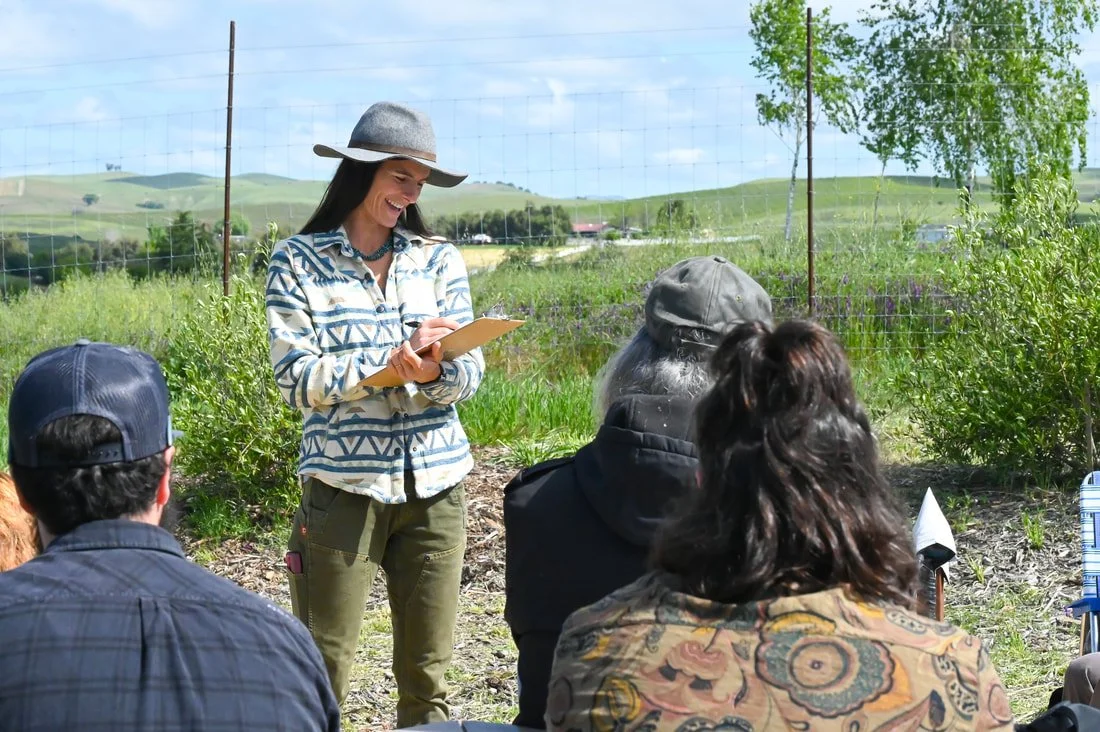
Blaze Elation hosts a hands-on workshop at Soloro Farm. The workshops typically cover regenerative agriculture, kids gardening, canning, grant writing, strategy and more.
When Blaze Elation founded Soloro, a non-profit farm on her 14-acre property in Creston, she envisioned growing food for local families and food banks while caring for the land through regenerative farming practices. But navigating funding opportunities and technical processes felt overwhelming for a small, non-commercial farm. That’s when a neighboring farmer pointed her to the Community Environmental Council (CEC).
Our team visited the Soloro property to understand Blaze’s goals and help her turn her vision into an actionable plan. CEC connected her to California’s Pollinator Habitat Program (PHP) and helped her unlock nearly $28,000 in grant funding to support climate-smart improvements on the land.
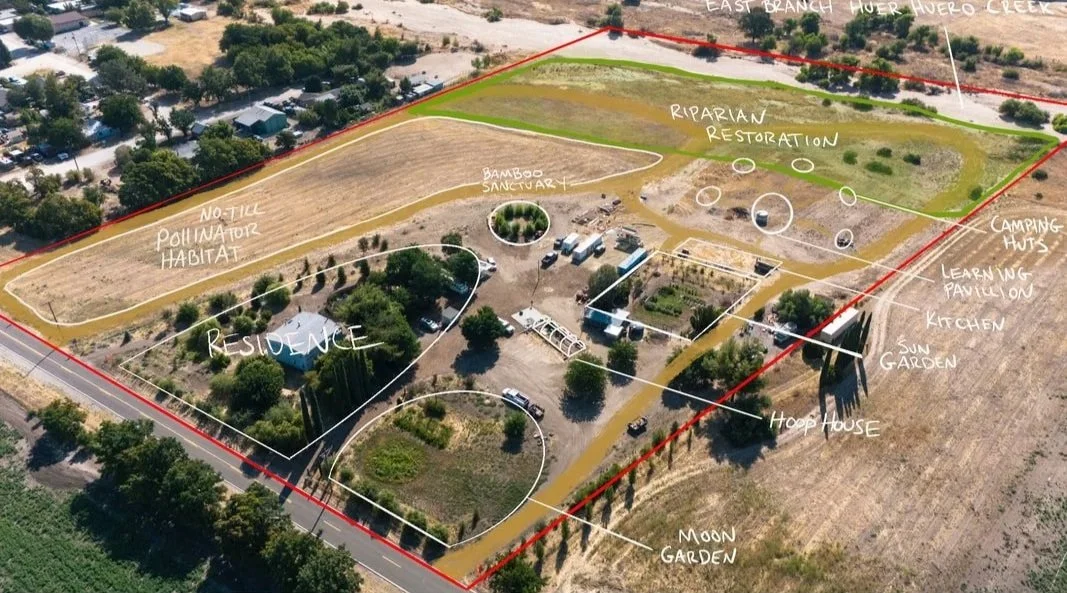
A map of the Soloro Campus, outlining the new climate-smart practices Blaze is implementing with support from CEC and the Pollinator Habitat Program.
With CEC's guidance, Blaze implemented 1,000 feet of hedgerows, planted three acres of cover crops, and established a diverse tree and shrub habitat — practices that improve soil health, support pollinators, capture carbon, and strengthen resilience to drought and a changing climate.
For growers like Blaze, CEC’s support helps make regenerative agriculture more accessible and achievable — creating healthier farms, stronger local food systems, and more resilient communities across the Central Coast.
