“Climate change isn’t abstract for farmers — we see its impact every season. Working with CEC has given us more confidence in the future of this land and shown us how regenerative farming can build long-term resilience.”
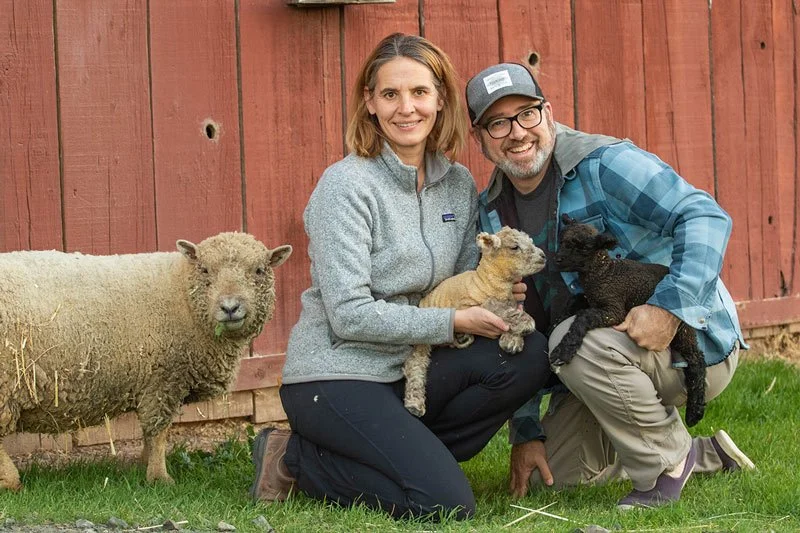
Anna and David deLaski pose at their deLanda Farm and Vineyard, where regenerative practices — from native plants and compost to bees, sheep, and fruit trees — support biodiversity, soil health, and a thriving ecosystem.
Anna deLaski grew up in Austria, where farming and winemaking were deeply rooted in her family's traditions. After returning to California with her husband David, the couple purchased a farmhouse and vineyard in Los Olivos, founded Solminer Wine, and committed to farming in a way that restores and protects the land.
When Anna tried applying for California’s Pollinator Habitat Program (PHP) on her own, the process quickly became complicated and time-consuming. She turned to the Community Environmental Council (CEC), and our team helped navigate the paperwork, manage deadlines, and connect the deLaskis with experts at the Santa Barbara Botanic Garden to identify native plants that support pollinators and beneficial insects.
With support securing more than $15,000 in funding, Anna implemented hedgerows and wildlife habitat areas that increase biodiversity, strengthen natural pest control, and nurture a healthier, more sustainable farm ecosystem.
Anna has also opened Solminer's doors to fellow growers through climate-smart viticulture workshops and pest management trainings hosted in partnership with CEC. Today, the farm has become a gathering place for local vintners exploring more climate-resilient approaches to farming across the Central Coast.
