Blog
A space for learning.
Aaron J. Is a Bimodal Commuter
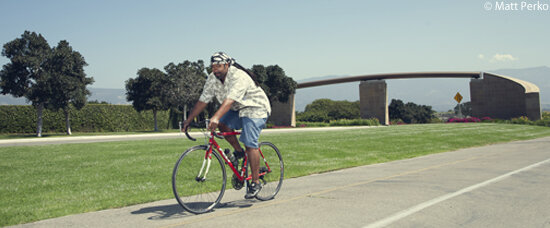
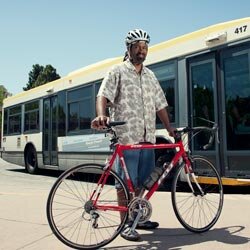
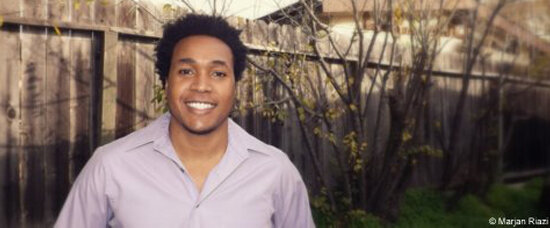
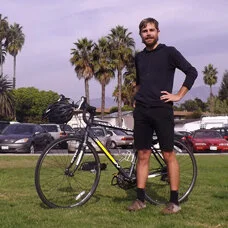
Aaron Jones, Associate Director for Community Affairs for UCSB’s Associated Students, commutes regularly from his home in downtown Santa Barbara to the UCSB campus. Each day, he travels the same route, but his trip isn’t in the comfort of his own vehicle. As part of a one-car family, Aaron spends the majority of his commute on the bus or on his road bike.
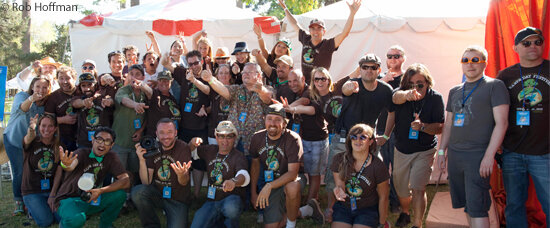

What We're Watching: Films that influence our work
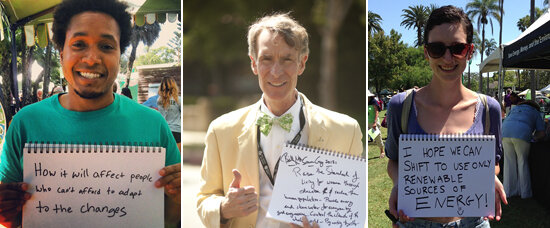
Find out what films are influencing the work of CEC’s Staff, Board, and Partnership Council.
MedBridge Earns Green Business Status
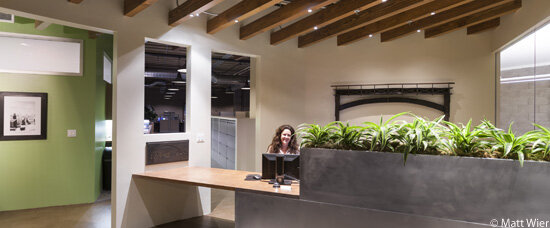
When the Santa Barbara-based ambulatory surgical center (ASC) and physician practice management company, MedBridge, purchased a new building and moved its headquarters into the funk zone, the executive team knew they wanted the location to demonstrate the company’s “holistic approach to building and core values as a business,” said MedBridge Chief of Staff Ruth Loomer, co-chair of CEC’s Partnership Council.
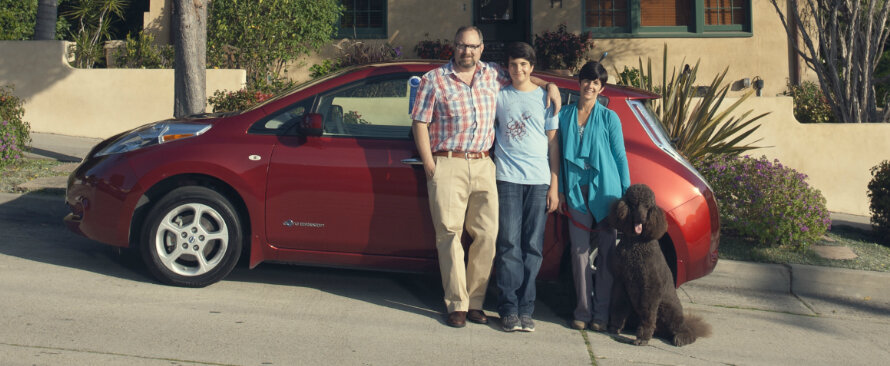
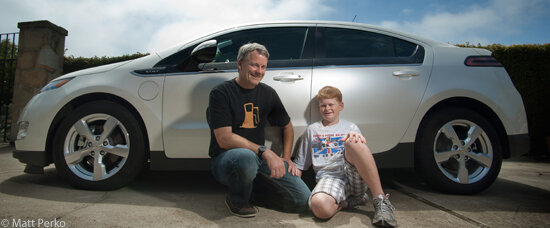
Testing the Efficiency of the Family’s Electric Vehicle
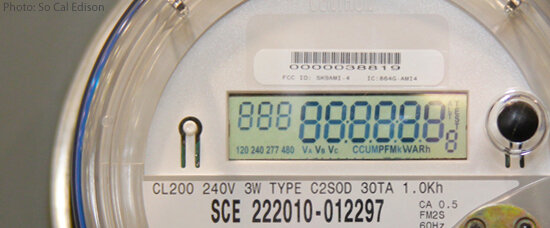
Although he’s been known to play a video game or two, Noah Z. is not your ordinary teenager. Recently, Noah decided he wanted to express his concerns about the world his generation is inheriting by shedding light on a simple way that American drivers can reduce their carbon footprint. His experiment won him a medal at the Santa Barbara County Science Fair and has him thinking about the future. The idea started when he and his family checked out the Green Car Show at CEC’s 2012 Earth Day Festival.
Steve H. Prefers to Bypass the Pump
Steve Hahn has been interested in sustainable transportation and electric vehicles for as long as he can remember. Growing up in Detroit, he was steeped in the car culture, as well as the big city’s trains and subways. Later in life he moved to Santa Barbara and began working for the Metropolitan Transit District (MTD). Residing close to work, Steve drives a Neighborhood Electric Vehicle (NEV) every day. It seemed like an efficient and sustainable decision, and “bypassing the pump has also been nice.” He has enjoyed it so much so that he even converted his neighbors, creating Santa Barbara’s very own EV Neighborhood.

Fifteen Hours with Al Gore
Katie Davis is a member of the CEC Partnership Council, as well as a trained presenter with Al Gore’s Climate Reality Project. Below she tells the story of her experience training with Al Gore.
Katie will be presenting her Climate Reality presentation at 7 pm on Thursday, February 28 at the Santa Barbara Public Library.
Five years since he won an Academy Award for An Inconvenient Truth and a Nobel Prize for efforts to educate the world about global warming, what’s happened to Al Gore’s presentation and, indeed, actions to address the causes of climate change?
Along with 1,000 other Climate Leaders from 50 countries, I recently went through training in San Francisco on how to give the latest version of his presentation on climate change. The training included one 15-hour-marathon day with Al Gore that went from 8 am to 11 pm.
The latest incarnation of Gore’s presentation, entitled Climate Reality, is heavy on weather. What’s changed in the last five years is the willingness of scientists to point to the freaky storms, record heat waves, devastating droughts, super floods and massive fires and say definitively – yep, that’s us. Climate scientists used to be careful not to blame any one extreme weather event on global warming. But that’s changing. When we break 362 all-time high temperature records in the U.S. and no cold records - as we did in 2012 - it’s pretty clear we’re living with climate change right now.
Or as Gore put it, "It's like a nature hike through the Book of Revelation."
While global emissions have continued to rise, there are some signs of hope. Renewable energy production has exceeded projections nationally, and California is ahead of the trend. In 2011, 20% of California’s energy use was renewable.
Santa Barbara, with its remarkable record of environmental leadership and abundant sun, wind and waves, could play a leading role in showing the world it’s really possible to kick the fossil fuel habit.
Question is – are we up for the challenge?
Refrigerator Recycling Pays Off
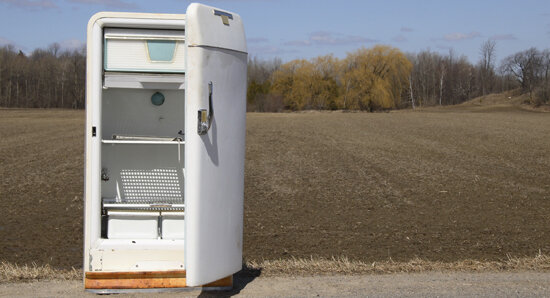
Refrigerators and freezers consume about one-sixth of all electricity in a typical American home, making them the most energy-consuming household appliance. If you are looking to cut down on your energy costs this year you may want to consider discarding your spare, working refrigerator or upgrading your existing one to a more energy-efficient model.
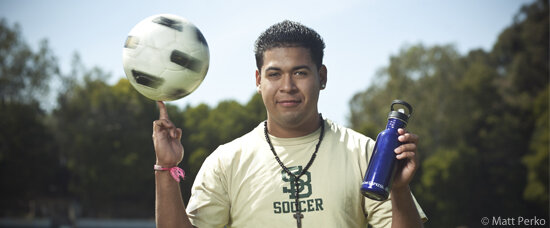
Students Reduce Local Plastic Pollution by Reusing
With funding from local foundations, CEC's Rethink the Drink program has installed 16 refill stations on local elementary, junior high, high school and college campuses since the beginning of 2010. As of this month, schools have used the stations a total of 230,239 times and have dramatically reduced their use of disposable plastic water bottles.
Our Local Food System Explained, Part 2
As part of Eat Local Month in Santa Barbara, CEC talked with local experts about local food systems. This is the second of two blog posts that explore the Santa Barbara food system, the system's biggest energy impacts, and simple steps you can take to reduce your food footprint.
(Click image for full size version.)
Our local food system can be simplified into six components seen in the graphic above.1 The food system in the U.S. accounts for around 15% of national energy consumption, so this system must be addressed as a part of our long-term energy strategy.2 Each part of the system has significant energy impacts -- from fertilizing the soil to growing crops, from refrigerating and cooking food to disposing of food scraps. Some of these impacts can be reduced with simple lifestyle choices, and some require larger scale systemic and regulatory changes. In this post, we look at what happens after the food has been grown, processed, packed up and shipped to your community.
Retail and Restaurants
11% of energy used in the food system
Much of our food is grown by farmers and then sold to grocery stores, wholesale clubs, and convenient markets for retailing to the public. A big portion ends up with restaurants, caterers, and institutional cafeterias (e.g. schools, prisons, hospitals, and universities). Most of the energy used by retailers is in refrigeration and lighting, and the restaurants use quite a bit in cooking. Both are energy-intensive users of commercial real estate.
Make an impact: Encourage retailers to prioritize energy efficiency.
Restaurants and grocery stores can reduce their impact by using energy efficient lighting and appliances in their retail spaces. They can also work to eliminate landfill waste generated by their operations. There are several utility and government programs designed to help this sector; a good starting point for resources is the voluntary Green Business Program.
Home Consumption
31% of energy used in the food system
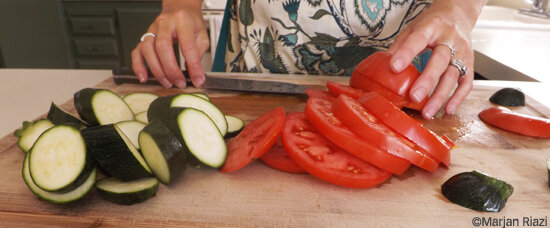
The consumption of food at home is the largest component of energy use in the food system. From old, sparsely-filled second refrigerators in the garage, to ovens that are fired up to toast a piece of garlic bread, most of the energy consumption in the kitchen is used for refrigeration (40%), cooking (20%), and water heating for dishes (20%).
Make an impact: Recycle your extra refrigerator.
In 2005, 22% of households in the U.S. owned two or more refrigerators. Most households only need one to keep perishable food cold. Watch CEC's e-news for free refrigerator recycling programs. Information on refrigerator recycling →
Make an impact: Buy energy efficient appliances.
Old toasters, microwaves, and other kitchen appliances are much less energy efficient than the newer Energy Star appliances. If you're not sure how your appliances are performing, you can buy a Kill-A-Watt device for $25 to measure how much energy your appliances use. Compare your figures with newer appliances and decide if it's time to upgrade. More information →
Make an impact: Stop pre-rinsing your dishes with hot water.
New dishwashers are quite efficient, and it takes a considerable amount of energy to heat water for pre-rinsing.
Disposal: The hidden impact
The majority of our food waste ends up rotting in a landfill and releasing methane gas, a potent greenhouse gas with a global warming potential 25 times that of carbon dioxide. Only about 60% of the food grown and produced by the food system is actually eaten. The rest of the food is wasted by retailers, restaurants and consumers.3 That's a lot of food energy being wasted.
Make an impact: Compost your food scraps.
Composting food waste causes it to decompose aerobically, turning it into a valuable gardening product instead of a potent greenhouse gas. For tips on composting in your backyard, visit lessismore.org. Also, encourage your local government officials to adopt municipal composting as part of its waste disposal services. Information on business curbside composting →
A checklist
The food system is large, and analyzing energy use within the system presents complex questions. You can make a positive impact with a few lifestyle adjustments:
- Buy organic.
- Buy whole, minimally processed foods.
- Buy local food.
- Encourage retailers to prioritize energy efficiency
- Recycle your extra refrigerator.
- Buy energy efficient appliances.
- Stop pre-rinsing your dishes with hot water.
- Compost your food scraps.
Sharing is powerful too. Tell your friends and neighbors how you're reducing your food footprint.
It's also helpful to encourage your elected officials to make food-energy issues a priority. Subscribe to our Action Alert email list and when it's time to mobilize, we'll let you know.
1Graphic adapted from the original at: http://www.nourishlife.org/teach/food-system-tools/
2Canning, P., Ainsley C., Sonya H., et. al. (2010). Energy Use in the U.S. Food System, ERR-94, U.S. Dept. of Agri., Econ. Res. Serv.
3Hall, K., Guo, J., Chow, C. (2009). The Progressive Increase of Food Waste in America and Its Environmental Impact. PLoS ONE 4 (11): e7940.